A good tin-lined copper pan is a pleasure to cook with. The copper delivers heat quickly and evenly, while the tin keeps your food away from the metal underneath. That lining, though, is the delicate part. It is soft, it dulls, and it melts at around 230°C — a temperature a hot hob can reach without much effort. Most of the damage done to copper pans is not caused by cooking. It is caused by well-meaning cleaning: a scouring pad, a dishwasher cycle, a splash of bleach. Here is how to bring a tired pan back to life without wrecking the surface that matters most.
Two metals, two different approaches
The first thing to understand is that you are never cleaning one pan. You are cleaning two metals with very different tolerances, and they need to be treated separately.
The copper exterior changes colour with use. It goes from a warm salmon pink to a deeper brown, then to a dark bronze or a greenish patina. This is surface oxidation and it is harmless. It has no effect on how the pan cooks. The tin interior behaves differently: bright and silvery when new, then quickly settling into a dull pewter grey. That grey is normal and expected. It is not dirt, and it will not come back to a mirror shine no matter how hard you scrub.
Any product or pad aggressive enough to brighten tired copper is aggressive enough to damage tin. That single principle will guide almost every decision you make from here.
Five things that ruin a tin lining
Before the cleaning advice, the warnings. If you avoid these, your pan will last for decades:
- The dishwasher. Dishwasher detergent is alkaline and harsh. It strips tin, dulls copper and can leave both looking flat and chalky. No tin-lined pan should ever go in, not even on a short cycle.
- Abrasive pads and powders. Steel wool, wire brushes, scouring cream, sandpaper and the rough side of a sponge will all scratch tin. Scratches are permanent, and they give food somewhere to catch.
- High heat and empty pans. Tin melts at roughly 230°C. Preheating an empty pan on a high ring can blister or bead the lining in seconds. Copper conducts so well that medium heat is almost always plenty.
- Boiling dry. A pan left to simmer until the liquid disappears will overheat the base and take the tin with it. Stay nearby, or set a timer.
- Salt and acid left sitting. Salt sprinkled into cold water and left overnight can pit metal, and acidic food — tomato, wine, lemon — left in a pan with thinning tin will start to attack the copper underneath. Cook with both freely, just do not store food in the pan.
Everyday cleaning after cooking
Let the pan cool for a few minutes before you wash it. Plunging hot copper into cold water is a shock to the metal and the lining, and there is no reason to risk it. Once it is warm rather than hot, wash it by hand in warm water with a small amount of mild washing-up liquid and a soft sponge or cloth.
Rinse, then dry it straight away with a soft towel. Do not leave it to drain on the rack — water sitting on copper leaves marks that need polishing to remove, and water trapped against tin does the surface no favours either.
For food stuck to the base, do not scrape. Half-fill the pan with water, add a spoonful of bicarbonate of soda or a small splash of vinegar, and bring it to a gentle simmer for a few minutes. The residue will lift on its own, and a soft sponge will finish the job. Keep wooden spoons and silicone tools as your default; metal utensils will scratch the tin.
Restoring the copper exterior
Polish the outside. Keep the inside out of it. Work at the sink, hold the pan so nothing runs into the interior, and wipe the rim last with a cloth that has barely any paste on it.
- Wash and dry the pan so you are polishing clean metal, not cooking residue.
- Mix two tablespoons of fine salt with enough white vinegar or lemon juice to make a loose paste. A proprietary copper polish works too, but check that you keep it off the tin.
- Rub the paste over the outside with a soft cloth, following the curve of the pan and working in small sections. Do not press hard. Copper is soft and heavy pressure simply moves metal around.
- Leave it for a minute on stubborn dark patches, then rinse with warm water, keeping the flow away from the interior where you can.
- Dry with a clean cloth and buff to a shine with a second dry cloth or a microfibre square.
Repeat once or twice a year rather than every week. Constant polishing wears away a thin layer of copper each time, and many cooks prefer a settled patina anyway. Deep tarnish that sits in the hammer marks of an old pan looks like history, not neglect.
One thing worth checking on a new pan: copper often arrives from the shop with a clear lacquer coating to stop it tarnishing on the shelf. That lacquer must be removed before the pan goes anywhere near heat, or it will burn on. A solvent such as acetone on a cloth will take it off. Wash the pan thoroughly afterwards.
Inside the tin: what is cleanable and what is not
Dull grey tin is clean tin. Dark brown or black build-up from cooking fats will lift with the simmering method above. A faint blue or rainbow tinge sometimes appears after high heat and is harmless — it fades with use.
What you cannot fix is wear. When tin thins, patches of pink copper begin to show through, usually on the base first, then up the sides. Fine scratches from utensils are cosmetic, but bare copper patches are not. No polish, paste or scrub will restore tinning, because the tin is no longer there. Stop cooking with the pan, especially with anything acidic, and look into having it re-tinned.
When the pan needs re-tinning
Re-tinning is a specialist job. The old tin is stripped off and fresh tin is wiped over the copper, usually with heat and a flux. It is not a home project, and the equipment and fumes involved make it a bad idea to try. A properly re-tinned pan comes back looking almost new and will serve for years more, which makes it worthwhile for anything of quality — a Mauviel, a Bourgeat, a good vintage piece picked up at a market. Between the worn tin and the fresh tin, keep the pan out of the kitchen.
A routine that keeps copper and tin in good order
None of this takes long once it becomes habit. Wash by hand, cool first, dry immediately. Use wood or silicone rather than metal. Cook on medium heat and never heat an empty pan. Add salt to boiling water rather than letting it sit in a cold pan. Store pans hanging, or stack them with a cloth or a sheet of paper between each one so the rims do not rub. Polish the outside a few times a year and leave the inside alone beyond a gentle wash.
A tin-lined pan looked after that way will outlast most of the kitchen it lives in. The dull grey interior is not a sign of a neglected pan. It is the sign of one that gets used.
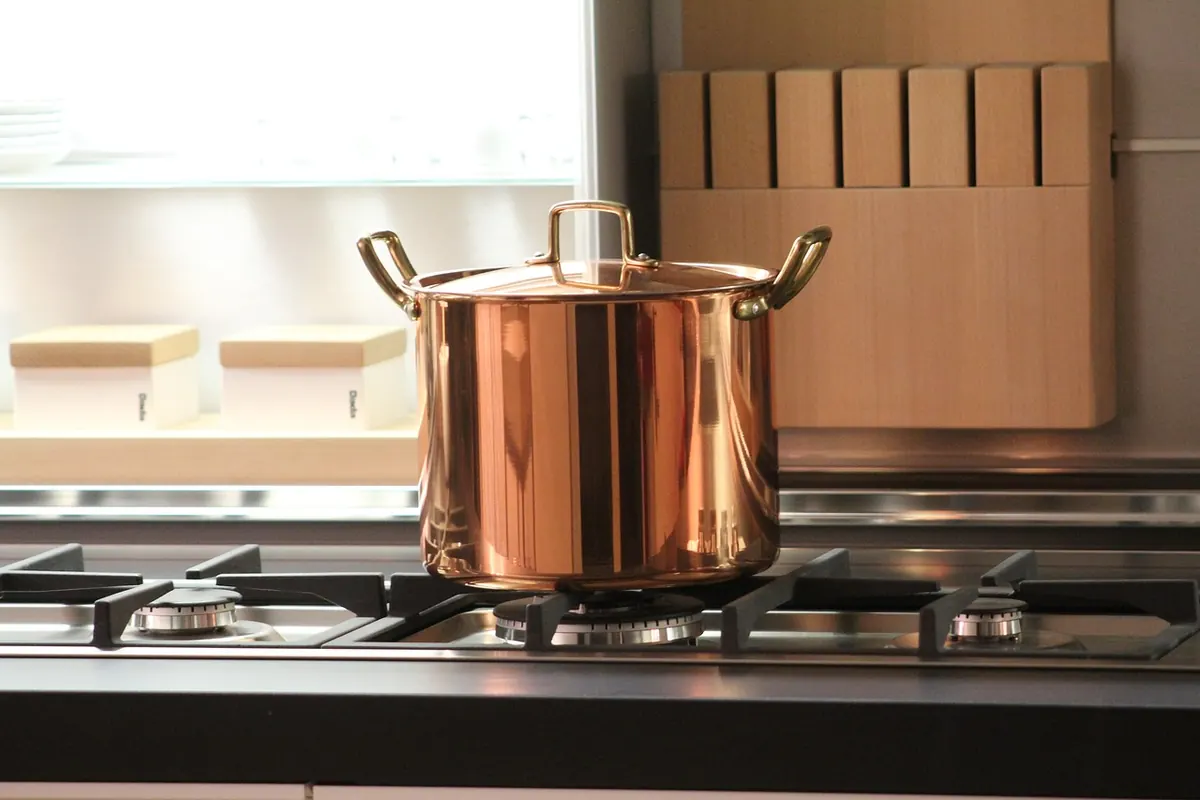
Photo: sferrario1968 / Pixabay